An Acrostic Poem is often a writer’s first introduction to the world of structured verse, yet it harbors a depth that spans millennia of literary tradition. At its core, this poetic form relies on spelling out a hidden message—usually a name, theme, or riddle—using the first letter of each line. While many people associate these verses with elementary school classrooms and simple word play, the true history of acrostics reveals a sophisticated literary device used by ancient philosophers, classical poets, and legendary authors to encode subversive messages, theological insights, and profound emotional truths. From the hidden signatures in ancient Greek manuscripts to the deeply layered metaphors of John Milton, understanding how to craft and analyze these poems opens up an entirely new dimension of creative writing.
💡 Key Takeaways
- An acrostic is a poem where the first letters of each line spell a word or phrase vertically.
- The form dates back to Ancient Greece and was frequently used in classical and biblical texts to hide secret messages or signatures.
- Acrostics do not require strict meter or rhyme, making them accessible for beginners while remaining structurally challenging for advanced poets.
- Advanced variations include the double acrostic, phrase acrostic, and riddle poems.
- Successful drafting requires brainstorming sensory language before attempting to fit words into the vertical constraint.
What is an Acrostic Poem? Definition and Core Mechanics
To define the acrostic poem accurately, one must look beyond the simple vertical alignment of letters. In its most traditional form, an acrostic is a poem in which the initial letters of each line, when read downwards, form a specific word, name, or phrase. This vertical word serves as the thematic anchor for the horizontal text. Unlike a sonnet or a haiku, the acrostic does not impose strict rules regarding meter, syllable count, or rhyme scheme. This structural freedom allows the poet to focus entirely on descriptive language, sensory details, and the overarching narrative.
Because of this flexibility, acrostic poetry serves as an excellent foundational exercise in creative writing. It removes the intimidating barriers of traditional verse structure, allowing writers to concentrate on vocabulary and imagery. However, this apparent simplicity is deceptive. Crafting a high-quality acrostic—one that reads naturally without feeling forced by the vertical constraint—requires significant skill. The text must flow logically from one line to the next, maintaining a cohesive thought or narrative rather than just being a disjointed list of words that happen to start with the right letters.
Historically, the capitalization of the first letter of each line has been a standard convention to visually highlight the hidden message. This visual cue transforms the poem into a puzzle, inviting the reader to engage with the text on multiple levels. Whether a writer is composing a lighthearted tribute to a pet or embarking on a metaphorical exploration of life, the core mechanics of the acrostic remain the same: the vertical axis dictates the structure, while the horizontal axis delivers the soul of the poem.
Famous Acrostic Poem Examples Through the Ages
Notre selection: Magnetic Poetry Kits
Magnetic Poetry – Coffee Kit – Words for Refrigerator – Write Poems and Letters on the Fridge
En tant que partenaire Amazon, nous pouvons percevoir une commission sur les achats eligibles.
The assumption that acrostics are merely a modern pedagogical tool or a simple form of word play ignores a rich and complex literary history. Long derided by some critics as mere coincidences or parlor tricks, acrostics in ancient poetry are now recognized as a widespread phenomenon and a major source of subtextual meaning. The earliest recorded versions of this poetic form were found in Ancient Greece, where they were often used as mnemonic devices or to embed the author’s signature within the text.
Classical Origins and the Sibylline Oracles
In the ancient world, reading and writing practices were highly conducive to vertical decoding. Texts were often written as continuous blocks of capital letters without spaces, resembling modern word-search puzzles. As a scroll was unrolled, the columns of text would appear before the rows, making vertical patterns visually striking. The Sibylline Oracles, a collection of prophetic utterances in Greek hexameter, famously utilized acrostics. Cicero himself discussed the intentionality of these vertical messages, noting their complexity and the deliberate craftsmanship required to weave a prophetic word through the initial letters of consecutive lines.
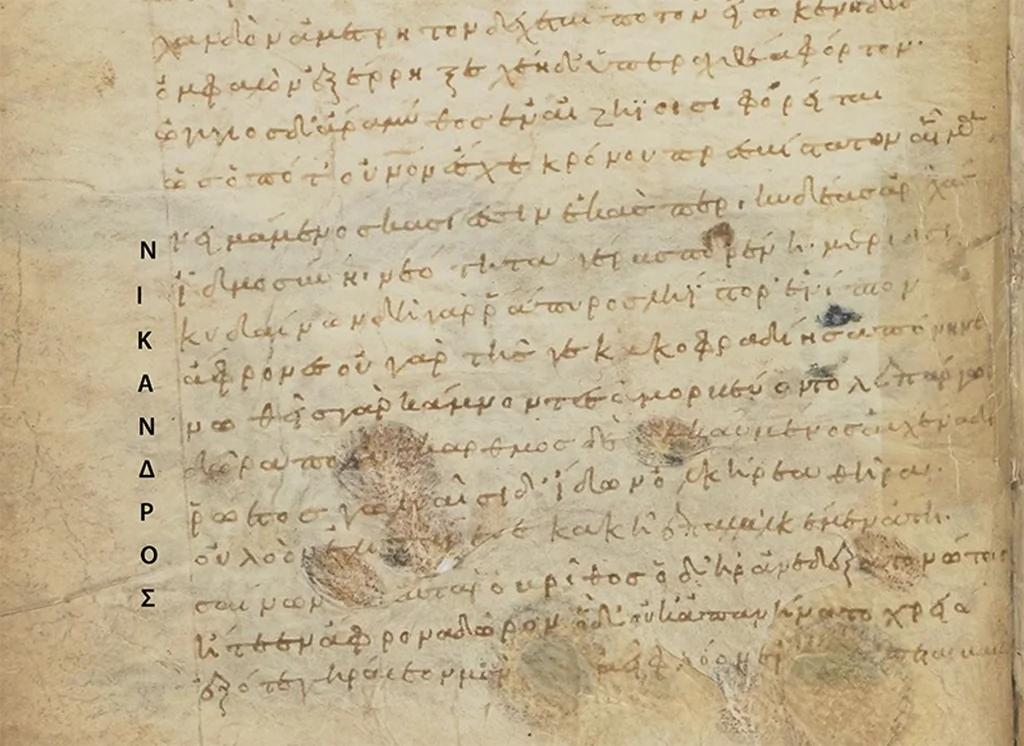
One of the most fascinating classical examples comes from Nicander, a Greek poet of the 2nd century BCE. In his didactic poem Theriaca, which details various venomous snakes, Nicander embedded a striking acrostic. While describing the dipsas—a snake whose bite causes unquenchable thirst—he tells a primeval myth about the loss of human immortality. The first letters of the lines recounting this myth spell out his own name: NIKANDROS. This was not just a signature; it was a clever wordplay, as “nik-andros” translates to “victory over man,” perfectly echoing the snake’s triumph over human eternal youth.
Vergil and the Biblical Connection
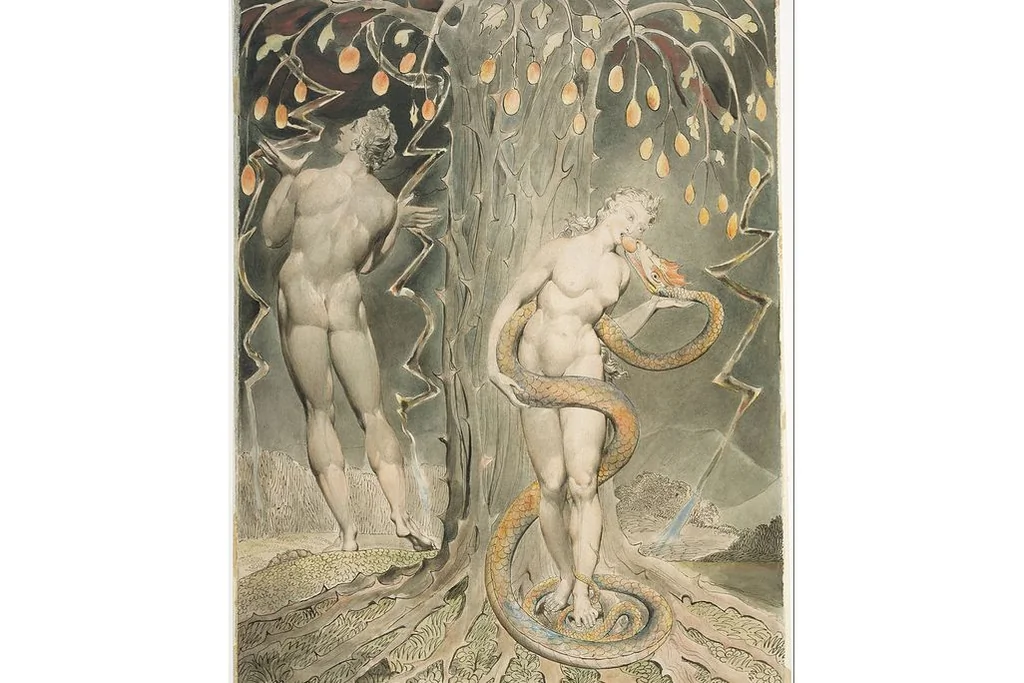
The cross-pollination of classical literature and biblical texts also heavily features acrostic structures. Historical data shows that 10-20% of the Roman Empire’s population was Jewish, facilitating a profound exchange of ideas. Vergil, in his masterpiece the Georgics, famously included an acrostic that bridged the gap between Athens and Jerusalem. In a passage detailing the tragic death of Eurydice by snakebite, the first letters of the lines spell out ISAIA AIT (“Isaiah says”). This hidden message connects the classical myth of Orpheus and Eurydice to the biblical narrative of the Fall of Man and the serpentine seduction of Eve.
The biblical tradition itself is rich with acrostic poetry. The most prominent example is Psalm 119, the longest chapter in the Bible. It is an intricate alphabetic acrostic consisting of 22 stanzas, one for each letter of the Hebrew alphabet. Each of the eight lines within a stanza begins with the corresponding Hebrew letter. This monumental verse structure served both as a powerful mnemonic device for memorization and as a symbolic representation of totality and perfection—covering the subject from A to Z, or rather, from Aleph to Tav.
The ‘FALL’ of Paradise Lost: Milton’s Hidden Messages
Fast forward to the 17th century, and we find acrostics being used to distill the essence of epic poetry. John Milton’s Paradise Lost is renowned for its complex theology and blank verse, but it also contains brilliant hidden messages. In 2018, undergraduate student Miranda Phaal discovered a previously unnoticed acrostic in Book 9, during the crucial argument where Adam and Eve debate whether to face Satan’s temptations separately or together.
The interlocking acrostic spans precisely 13 lines (9.329-41). Reading the first letters downwards spells “FFAALL,” representing the double fall of man (Adam and Eve). Reading the letters from bottom to top spells a single “FALL,” representing the fall of Satan. This masterful use of the vertical word comments on their shared inciter and their shared root of pride, proving that the acrostic form can carry immense dramatic and thematic weight.
Advanced Styles and Creative Variations in Acrostic Poetry
While the standard single-letter vertical alignment is the most common, the evolution of poetry writing has birthed several advanced variations. These complex forms challenge the poet’s vocabulary and structural discipline, turning the poem into an intricate linguistic puzzle that often serves as a journey into self-reflection for both the writer and the reader.
The Double Acrostic Poem Definition
A double acrostic increases the difficulty exponentially. In this variation, both the first letter and the last letter of each line spell out a word or message. This requires meticulous attention to line length, syntax, and word choice, as the poet must force the horizontal thought to begin and end on specific alphabetical constraints without sounding contrived. A famous example is Paul Hansford’s poem about the town of Stroud:
Set among hills in the midst of five valleyS,
This peaceful little market town we inhabiT
Refuses (vociferously!) to be a conformeR.
Once home of the cloth it gave its name tO,
Uphill and down again its streets lead yoU.
Despite its faults it leaves us all charmeD.
This double acrostic style showcases how constraints can breed creativity, forcing the writer to explore unusual syntax and vocabulary to fulfill the structural requirements while maintaining a conversational tone.
Phrase and Riddle Acrostics
Beyond single words, poets frequently use phrase acrostics, where the first word of each line forms a well-known quotation or a complete sentence. This is particularly popular in memorial poetry or romantic verse. Another highly engaging variation is the riddle poem. In a riddle acrostic, the title provides a clue, the body of the poem describes the subject using sensory details, and the vertical word reveals the answer. Poet Laura Purdie Salas famously used this technique in her poem “Revenge of the White Dragon,” where the descriptive lines about snow and rumbling mountains vertically spell out the word AVALANCHE.
Rhyming vs. Free-Form Styles
Although acrostics do not require rhyme, incorporating a rhyme scheme adds a layer of musicality to the literary device. Writing a rhyming acrostic is notoriously challenging because the poet must manage the vertical alphabetical constraint simultaneously with the end-line phonetic constraint. Often, poets allow the rhymes to fall naturally within the rhythm of the piece rather than forcing them into perfect couplets. The free-form style, such as Edgar Allan Poe’s famous acrostic “Elizabeth,” remains the most accessible, granting the poet the liberty to let the line lengths expand and contract organically to serve the emotional resonance of the text.
Step-by-Step Guide: How to Write an Acrostic Poem
Understanding the history and variations of the form is inspiring, but sitting down to write your own requires a methodical approach. The most common mistake beginners make is writing the vertical word and immediately trying to force sentences to start with those letters. This often results in what poets call “passionless nonsense”—a disjointed collection of words that lack narrative flow. To avoid this, follow a structured drafting process.
Step 1: Selecting a Subject and Vertical Alignment
Begin by choosing a specific subject. This could be a person’s name, an emotion, a season, or an abstract concept. Once you have your subject, determine the mood or the main point you want to convey. Are you writing a humorous tribute, a dark riddle, or a deep philosophical exploration of release? Write your chosen word vertically down the left side of your page, allocating one line per letter.
Step 2: Brainstorming Sensory and Descriptive Language
Before you look at the letters on your page, brainstorm a robust list of vocabulary related to your topic. Focus on sensory imagery: what does the subject look, sound, smell, or feel like? Write down strong verbs, vivid adjectives, and relevant nouns. By building a reservoir of topic-specific vocabulary first, you ensure that the content of your poem remains focused and evocative, rather than being entirely driven by the alphabetical constraints.
Step 3: Drafting and Refining the Flow
Now, begin matching your brainstormed ideas to the vertical letters. A highly effective technique is to write the first and last lines of the poem before filling in the middle. This anchors your narrative, giving you a clear starting point and a defined conclusion. As you draft, pay close attention to the enjambment—the continuation of a sentence without a pause beyond the end of a line. Let your sentences flow naturally across the line breaks. If a particular letter is proving difficult (for example, finding a natural way to start a line with ‘X’ or ‘Z’), try rewording the previous line so that the difficult letter falls naturally at the beginning of the next clause.
Educational Benefits: Acrostic Poem Ideas for School
In the realm of education, acrostics are celebrated as a foundational pedagogical tool. Educator Kenn Nesbitt notes that acrostics are perfect for children because they remove the complex barriers of rhythm and meter, allowing young writers to focus purely on descriptive word choice and spelling. This makes them an ideal entry point for teaching the fundamentals of creative writing.
Acrostic Poem Examples for Kids
In elementary classrooms, teachers frequently use name-based acrostics to build classroom community. Having students write an acrostic using their own name encourages self-reflection and helps them identify positive personal traits. Furthermore, easy acrostic poem templates are utilized across various subjects. For instance, in science classes, students might write an acrostic for the word “GRAVITY” or “ECOSYSTEM” as a way to reinforce STEM vocabulary. By defining scientific terms within the creative constraints of a poem, students engage both the analytical and creative hemispheres of their brains.
Fostering Advanced Comprehension
For older students, analyzing famous acrostic poems serves as an excellent introduction to literary subtext. Discovering the hidden “SATAN” or “FALL” in Milton’s epics teaches students that literature is often layered with hidden meanings and that authors make deliberate, painstaking choices about word placement. This analytical practice translates directly into their own writing, encouraging them to view poetry not just as an expression of emotion, but as an intricately engineered piece of art.
Ultimately, whether you are a young student learning the alphabet, a hobbyist playing with word puzzles, or a serious poet embedding secret messages into a larger epic, mastering the Acrostic Poem offers a unique blend of structural discipline and creative freedom. The vertical constraint acts not as a cage, but as a trellis upon which the horizontal narrative can bloom. By understanding its classical roots, studying its advanced variations, and practicing the careful art of drafting, any writer can transform a simple vertical word into a profound literary statement. To explore more foundational techniques and expand your poetic repertoire, return to our complete acrostic poetry guide for further inspiration and structural templates.
Key Data & Statistics
- Jews composed approximately 10-20% of the Roman Empire’s population, influencing the cross-pollination of Jewish and Classical acrostic traditions (Source 8).
- Psalm 119 contains 22 stanzas, one for each letter of the Hebrew alphabet (Source 8).
- The interlocking ‘FALL’ acrostic in Milton’s Paradise Lost spans 13 lines (9.329-41) and features a triple vertical message (Source 4).
Frequently Asked Questions
What is an acrostic poem?
An acrostic poem is a poetic form where the first letter of each line, when read vertically from top to bottom, spells out a specific word, name, or phrase related to the poem’s theme.
Do acrostic poems have to rhyme?
No, acrostic poems do not require a rhyme scheme or a specific meter. They are often written in free verse, though advanced poets sometimes incorporate rhyme for added musicality.
What is a double acrostic poem?
A double acrostic is an advanced variation where both the first letter and the last letter of each line spell out a word or message vertically.
How do you start writing an acrostic poem?
Start by choosing your vertical subject word. Before writing the poem, brainstorm a list of descriptive, sensory words related to your topic. Then, draft the lines ensuring the horizontal text flows naturally and makes logical sense.
Are there famous examples of acrostic poems in literature?
Yes. Famous examples include the interlocking ‘FALL’ acrostic in John Milton’s Paradise Lost, the ‘ISAIA AIT’ acrostic in Vergil’s Georgics, and Edgar Allan Poe’s poem ‘Elizabeth’.
Sources
Primary Sources
- Why it pays to read for acrostics in the Classics (aeon.co · EN)
- Acrostic Poems (readwritethink.org · EN)
- Acrostic Poem (www.acrosticpoem.org · EN)
- Acrostics: Poetry, Top to Bottom • Laura Purdie Salas (laurasalas.com · EN)
- Student Discovers Secret Acrostic in Milton’s ‘Paradise Lost’ (www.smithsonianmag.com · EN)
- How to Write an Acrostic Poem – Kenn Nesbitt’s Poetry4kids.com (poetry4kids.com · EN)
- What are acrostic poems? – BBC Bitesize (www.bbc.co.uk · EN)
- Acrostic | The Poetry Foundation (www.poetryfoundation.org · EN)