For centuries, the most profound questions regarding the human condition have not been answered solely in heavy academic tomes, but within the rhythmic cadences of philosophical poems. When we seek to understand the meaning of existence, verse offers a unique sanctuary that bridges rigorous intellectual inquiry with deep emotional resonance. Unlike formal logic, which seeks to categorize and define, contemplative writing uses metaphor, paradox, and imagery to capture the ineffable aspects of our lived experience. By stepping away from strict empirical constraints, poets can articulate the sacred within the temporal, offering readers a space for spiritual awakening and profound reflection on the nature of reality.
💡 Key Takeaways
- Philosophical poetry merges intellectual rigor with emotional resonance, framing complex ideas through “subtler languages.”
- From ancient epics to modern existentialism, poets use verse to navigate the nature of reality, time, and mortality.
- Reading contemplative writing requires a shift from logical analysis to an appreciation of existential resonance.
- Contemporary works continue to explore the human condition, blending scientific inquiry with metaphysical reflection.
The Intersection of Verse and Vision: Defining Philosophical Poems
When exploring philosophical verses, it is essential to understand how they differ from traditional academic discourse. The philosopher George Santayana famously noted that philosophy is “reasoned and heavy,” whereas poetry is “winged, flashing, inspired.” While a philosopher must rigorously defend a thesis using empirical evidence and tight logical frameworks, a poet has the freedom to explore the human condition through intuitive leaps and evocative imagery. As Archibald MacLeish asserted in his Ars Poetica, “a poem should not mean but be.” Yet, the greatest philosophical poems about famous authors manage to do both: they exist as beautiful works of art while simultaneously probing the deepest questions of meaning.
In his monumental 620 -page volume on the subject, philosopher Charles Taylor argues that modern poetry serves as a vital template for reconnecting nature and spirit in a disenchanted age. Taylor distinguishes between a purely “designative” use of language—which merely describes the objective world—and an “expressive-constitutive” use. The latter, heavily utilized in poetry, actually shapes and modifies our emotional experiences as we articulate them. Figurative language must be understood as following a different semantic logic, one that portrays without simply asserting.
This constitutive power of language allows poets to communicate via the symbol. There is no longer a need for an allegorical system capable of establishing a direct analogy between the meaning of the poem and the rigid discourses of scientific knowledge. Instead, the poet’s vision is expressed in a dual language that cannot easily be translated back into ordinary, descriptive prose without losing its transcendent power.
Ancient Epics and Metaphysical Poetry: Mapping the Human Condition
Notre selection: Ancient philosophical texts in verse
En tant que partenaire Amazon, nous pouvons percevoir une commission sur les achats eligibles.
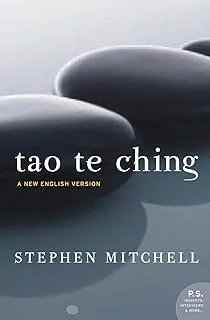
The tradition of metaphysical poetry and epic philosophical inquiry stretches back to antiquity. Early sages and poets recognized that the paradoxes of life and death were often best articulated through metaphor rather than strict syllogism. For instance, Lao Tzu’s Tao Te Ching utilizes simple, natural imagery to convey complex dialectical truths. By contrasting the pliant, living grass with the stiff, dead tree, Lao Tzu illustrates that the “supple and the weak are the comrades of life,” a concept that resonates deeply with those seeking a holistic understanding of the universe.
Similarly, in the Western tradition, Lucretius’s De Rerum Natura merged early scientific inquiry with epic verse, attempting to explain the universe’s atomic structure through the beauty of meter. Centuries later, Dante Alighieri’s Paradiso achieved what pure philosophy could not: rendering the indescribable “no-where and no-when” of the divine beyond into a vivid, structurally magnificent cosmic syntax. These famous poems about the meaning of existence provided public frameworks of meaning that entire societies could share and believe in.
Tip for readers: When engaging with ancient philosophical poems, focus on the underlying allegories rather than literal interpretations. These texts were designed to evoke a shift in consciousness rather than simply transmit historical facts.
As societies moved away from these universally accepted neoclassical “cosmic syntaxes”—such as the Great Chain of Being—poets were forced to conceive their own structures of order. This marked a profound shift in literary analysis, moving from an imitation of a pre-existing divine order to the articulation of a deeply personal world of references.
Romanticism and Deep Poetry About Life: The Cosmic Connection
As the Enlightenment dismantled older metaphysical hierarchies, deep poetry about life took on a new, urgent purpose. During the Romantic era, poets like William Wordsworth, John Keats, and Friedrich Hölderlin sought to forge what Charles Taylor refers to as a “spatial connection” with the natural world. In works like Wordsworth’s Tintern Abbey, nature is no longer just a backdrop but a living, breathing entity infused with a spirit that “rolls through all things.”
This era marked an “epistemic retreat.” Poets no longer claimed direct access to an objective cosmic order; instead, they generated powerful experiential senses of order from within. This internal structuring often touches on themes of enduring devotion, much like a hymn to everlasting love, where the connection between the individual soul and the vast universe becomes the ultimate source of spiritual sustenance. The critical theorist Hartmut Rosa expanded on this, defining it as “resonance”—a bivalent, mutual co-affectation where the subject experiences the world as answering, responding, and carrying them.
However, these connections with nature carry different connotations amid our modern ecological crises. It is hard to keep from wondering how Romantic nature poetry remains audible for a post-industrial society. Yet, the desire for resonance remains a human constant. When spatial connection to nature is undermined by industrialization, poets pivot to a temporal connection, seeking to redeem the past through memory and shared human suffering.
Modern Existential Poems: Navigating Time, Memory, and the Absurd
The transition into the 19th and 20th centuries brought forth existential poems that grappled with alienation, the absurd, and the fragmentation of time. Charles Baudelaire’s foundational work, The Flowers of Evil, published in 1857 , introduced the concept of “spleen”—a profound malady of lived time characterized by the endless, meaningless repetition of moments. Baudelaire’s work stands among the best philosophical poems about life and death, confronting the grotesque disorder of the modern world without flinching.
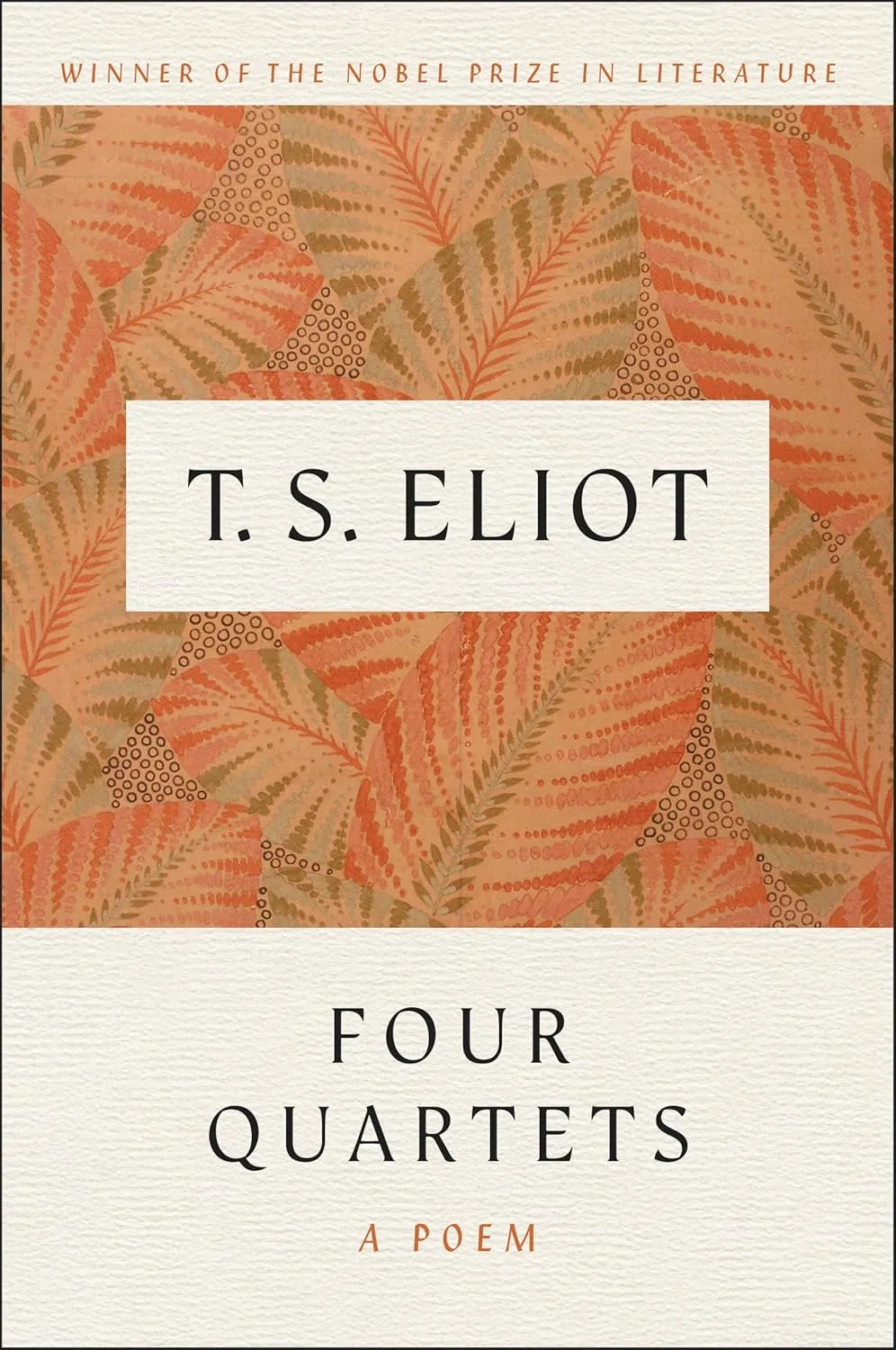
In stark contrast to Baudelaire’s despair, T.S. Eliot sought to redeem fractured time through spiritual contemplation. In his masterpiece Four Quartets, Eliot explores the convergence of past, present, and future at the “still point of the turning world.” This meditative approach transforms existential dread into a profound inquiry into how memory and presence intersect, distilling the heavy alchemy of sighs into moments of pure, transcendent clarity.
Furthermore, the influence of Schopenhauer’s aesthetic idealism cannot be ignored in this period. According to this view, art does not merely connect us with nature; it delivers us from the constitutively unfulfilling world of human desire. Stéphane Mallarmé embodied this by treating poetry as an aesthetic of “vibrating near disappearance.” His poems preserve the act of disappearance, the silence, and the néant (nothingness), abolishing the contingency of everyday objects to reveal their absolute essence.
Contemporary Voices: Poems About Existence in the 21st Century
Today, poems about existence continue to evolve, reflecting the complexities of the modern digital age, systemic injustice, and scientific advancement. Contemporary philosophical poetry examples often blend the mundane with the metaphysical, proving that the search for meaning does not require archaic language or ancient settings.
Jane Hirshfield, in her collection The Beauty, uses everyday objects—animals, quiet rooms, simple gestures—as entry points to explore impermanence and the philosophy of presence. Her tone is gentle and observational, inviting readers to linger on small details that illuminate larger truths. Similarly, Joseph L. Bensinger’s The Nested Soul frames metaphysical inquiry through scientific metaphor, weaving imagery of the cosmos with biblical narratives to meditate on consciousness.
Other modern poets tackle existential suffering through reimagined allegories. Shane McCrae’s New and Collected Hell transforms Dante’s inferno into a modern bureaucratic maze, questioning whether the soul can maintain its integrity under systemic oppression. Meanwhile, poets like Rowan Ricardo Phillips treat verse almost as a form of physics. In Silver: Poems, Phillips emphasizes the “meaningfulness” of life’s mysteries rather than searching for a singular, reductive meaning. This contemporary inwardness proves that the quest for self-discovery remains as vibrant today as it was in antiquity.
The Art of Contemplation: Reading and Writing Philosophical Poems
To truly appreciate philosophical poems, one must adopt a specific intentional stance. Literary critics suggest reading for “resonance” rather than strictly for logic. When you encounter short philosophical poems for reflection, look for the existential stance the poet is taking toward transcendence, rather than a formal argument to be debated or debunked. It is an exercise in experiencing the world as an answering, carrying force.
For those wondering how to write a philosophical poem, the key lies in cultivating a “naively philosophical” perspective. Start by observing the bivalent affect between yourself and the world. Allow figurative language to portray your longing, doubt, or joy without the pressure of asserting absolute facts. Embrace silence, recognizing that the unsaid often carries as much weight as the spoken word. By distilling complex emotions—perhaps the very transformative human sighs that mark our deepest sorrows—into precise metaphors, you create a space for genuine re-enchantment.
Writing Prompt: Choose an ordinary object in your room. Write a ten-line poem exploring its inevitable decay, using its physical properties as a metaphor for the passage of time and human mortality.
Ultimately, the enduring power of philosophical poems lies in their ability to articulate the sacred within the temporal. They do not promise easy answers to the mysteries of the universe, but rather invite us to inhabit the questions more fully. By offering a subtler language that transcends the boundaries of empirical science and rigid dogma, these contemplative verses remind us that the search for meaning is not a puzzle to be solved, but a profound human experience to be deeply felt and shared. Whether looking back at the epics of antiquity or reading the minimalist verses of contemporary authors, we find a shared human endeavor to map the soul’s journey through the cosmos.
Key Data & Statistics
- Charles Taylor’s seminal work ‘Cosmic Connections’ spans 620 pages of textual analysis on philosophical verse (Source 2).
- Baudelaire’s ‘Flowers of Evil,’ a foundational text for modern existential poetry, was published in 1857 (Source 2).
- The Poetry Foundation database contains nearly 1,000 poems specifically tagged under the subject of Philosophy (Source 1).
- PoemAnalysis identifies over 75 unique contemplative poems categorized by movement, from Absurdism to Zen (Source 5).
Frequently Asked Questions
What defines a philosophical poem?
A philosophical poem merges the rigorous inquiry of philosophy with the emotive, figurative language of poetry. Rather than arguing a thesis with empirical evidence, it uses metaphor, symbol, and paradox to explore the human condition, mortality, and the nature of reality.
Who are some famous philosophical poets?
Historically, poets like Lao Tzu, Lucretius, Dante, and Milton wrote epic philosophical works. In the Romantic and Modern eras, figures like William Wordsworth, Charles Baudelaire, T.S. Eliot, and Stéphane Mallarmé became prominent. Today, contemporary poets like Jane Hirshfield and Rowan Ricardo Phillips continue the tradition.
How should one read existential or metaphysical poetry?
Readers should approach these poems looking for ‘resonance’ rather than strict logical arguments. It is best to focus on the existential stance the poet takes and the emotions evoked by their imagery, allowing the poem to portray complex feelings without demanding absolute assertions.
What is the difference between designative and constitutive language?
According to philosopher Charles Taylor, designative language is used primarily to describe the objective world accurately. Constitutive language, heavily used in poetry, is expressive and figurative; it actually shapes, modifies, and brings new meaning to human experiences as they are articulated.
Sources
Primary Sources
- 75+ Contemplative Philosophical Poems (poemanalysis.com · EN)
- Explore Poems (www.poetryfoundation.org · EN)
- Cosmic Connections: Poetry in the Age of Disenchantment (ndpr.nd.edu · EN)
- Philosophical Poems (philosophicalsociety.com · EN)
- 7 Collections of Introspective, Philosophical Poetry (booktrib.com · EN)
- philosophical poetry – Beyond Language (beyondlanguagepoetry.com · EN)
- Short Philosophical Poems (www.poemhunter.com · EN)