For centuries, human beings have turned to adventure poems to capture the raw thrill of stepping into the unknown. Whether recounting epic sea voyages, quiet walks through untamed woods, or the daunting ascent of a treacherous peak, these verses bridge the gap between classic literary epics and modern outdoor wanderlust. Exploring this genre reveals that adventure poetry is far more than mere travel writing—it is a profound documentation of both physical endurance and spiritual transformation. By distilling the lived experience of exploration into rhythmic stanzas, poets invite readers to embark on journeys that challenge their perspectives and awaken their dormant courage.
💡 Key Takeaways
- Adventure poetry combines physical exploration with deep internal transformation, capturing the essence of wanderlust.
- Ancient texts like The Tale of Genji laid the foundation for narrative verse, utilizing poetry to build character and advance complex plots.
- Romantic and modern poets use the open road and untamed wilderness as powerful metaphors for life’s pivotal choices.
- The genre continually evolves, spanning from classic maritime epics to contemporary digital archives that celebrate outdoor exploration.
The Anatomy of Adventure Poems: Defining the Genre
At its core, the genre of adventure poetry is defined by its ability to articulate the human urge to explore. It is not simply about cataloging the sights of a foreign land; it is about capturing the essence of heroic journeys and the internal shifts that occur when one leaves their comfort zone. The anatomy of these poems relies heavily on a distinct blend of setting, conflict, and the traveler’s ultimate transformation.
The Urge to Explore: Why Poetry Captures Wanderlust
Poetry is uniquely equipped to capture the fleeting, intense emotions associated with travel. The rhythm of the verse often mimics the physical acts of journeying—the steady beat of footsteps on a trail, the rhythmic crashing of waves against a hull, or the galloping of a horse across an open plain. Alfred, Lord Tennyson perfectly encapsulated this restless spirit in his masterful work, Ulysses. By describing a life lived “always roaming with a hungry heart,” Tennyson established a foundational archetype for the adventurous soul who refuses to yield to a sedentary existence.
Key Elements: Setting, Conflict, and Transformation
Epic poetry and adventure verse share common structural DNA. The setting is rarely just a backdrop; it acts as an active participant or antagonist in the narrative. Whether it is a dark, impenetrable forest or a tempestuous ocean, the environment forces the protagonist into a state of vulnerability. Robert Frost famously presented this dynamic as a “call to courage,” where the physical divergence of two roads in a yellow wood becomes the ultimate metaphor for life-altering decisions. The true adventure lies not just in surviving the elements, but in the profound character development that follows.
The Epic Tradition: Narrative Verse and Ancient Journeys
To understand the modern landscape of adventure writing, one must look back to the origins of narrative verse. Ancient civilizations relied on poetic storytelling not only to entertain but to preserve the oral histories of their greatest explorers and warriors. These early works set the standard for how we structure tales of discovery today.
The Tale of Genji: A Millennium of Poetic Adventure
Notre selection: The Tale of Genji unabridged translation
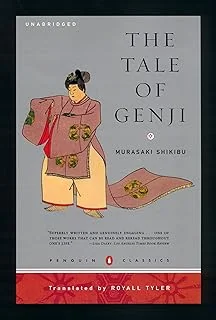
The Tale of Genji: (Penguin Classics Deluxe Edition) (English Edition)
En tant que partenaire Amazon, nous pouvons percevoir une commission sur les achats eligibles.
Murasaki Shikibu’s 11th-century masterpiece, The Tale of Genji, is often celebrated as the world’s first novel, but its profound reliance on poetry makes it a cornerstone of epic narrative adventure. Spanning over half a million words of prose, the text is intricately braided with highly allusive poetic language. In fact, the prose frequently threatens to turn back into poetry, as verse was the primary medium through which characters communicated their deepest desires and fears.
The sheer scale of this literary achievement is staggering. The epic contains 795 poems written from the perspective of 118 different characters. J. Keith Vincent, a Boston University scholar who spent nine years digitizing these verses, notes that it is “basically impossible to become a poet in Japan without having memorized The Tale of Genji.”
Ventriloquizing the Hero: Building Character Through Verse
What makes ancient epic poems about discovery and exploration so compelling is the author’s ability to “ventriloquize” distinct characters. In historical epics, the hero’s journey is mapped not just geographically, but linguistically. The stanza structure changes to reflect the protagonist’s emotional state—frantic and fragmented during a storm, smooth and melodic upon reaching a safe harbor. This nuanced approach to character building transformed simple travelogues into enduring works of art.
The Open Road: Romanticism and the Spirit of Discovery
As literature evolved into the Romantic era, the focus of famous adventure poems shifted from royal courts and mythical beasts to the individual’s relationship with nature. The open road became the ultimate symbol of freedom, offering a blank canvas upon which poets could project their philosophical musings.
Whitman and the Song of the Open Road
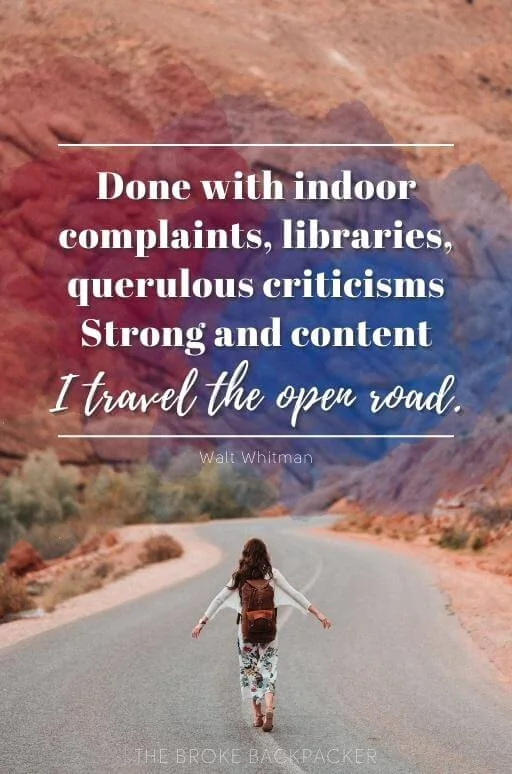
Walt Whitman’s Song of the Open Road remains the quintessential American expression of wanderlust. With the iconic opening lines, “Afoot and light-hearted I take to the open road,” Whitman captures the intoxicating liberation of leaving societal constraints behind. The poem is a celebration of physical movement and the belief that the traveler is the master of their own destiny. This sentiment is echoed in Richard Avedon’s concept of the “rolling stone,” suggesting that a life in constant motion gathers a wealth of experiences far more valuable than static security.
The Road Not Taken: Choice as the Ultimate Adventure
While Whitman celebrated the sheer joy of movement, other classic adventure poets focused on the gravity of the journey’s choices. The Irish poet John O’Donohue wrote extensively about how travel forces individuals to become more attentive to the “self you bring along.” The physical journey is merely a catalyst for internal growth. When a traveler navigates an unfamiliar landscape, they are simultaneously mapping the uncharted territories of their own psyche, creating what O’Donohue beautifully described as a “crystal of insight.”
Narrative Mastery: Storytelling Through Stanzas
Crafting a compelling narrative within the strict confines of meter and rhyme requires immense technical skill. The best adventure poems for students and scholars alike demonstrate how literary devices can be weaponized to build tension, establish pacing, and deliver satisfying resolutions. This narrative mastery is particularly evident in the works of Victorian and modernist poets.
Charlotte Brontë and the Poetry of Risk
Charlotte Brontë’s poetry often blended intense action with the quiet solitude of nature. In verses like “But two miles more, and then we rest!” she expertly balances the physical exhaustion of a journey with the psychological weight of the travelers’ mission. The intricate images she employs—heavy hazes baffling a pilot’s eye and treacherous rocks on dangerous coasts—serve to heighten the stakes. Her work proves that poetic storytelling can rival the most thrilling prose novels in terms of suspense and emotional payoff.
Testing Courage Through Sea Voyages
Famous poems about sea voyages have long served as testing grounds for human courage. The ocean, with its unpredictable fury and vast emptiness, is the perfect antagonist. Robert Browning explored the limits of bravery in his narrative verse, using extreme situations as “experiments” in human nature. Similarly, the emotional depth found in a mariner’s lament highlights the psychological toll exacted by a life spent battling the tides. Through these maritime epics, readers experience the terror of the storm and the profound relief of the calm, all from the safety of the shore.
Thematic Variations: From Romance to Bedtime Stories
The versatility of quest poetry allows it to adapt to a wide array of themes and audiences. While we often associate the genre with rugged explorers and ancient warriors, adventure verse is equally adept at exploring romantic partnerships and sparking the imaginations of children.
Metaphorical Journeys and Shared Paths
Romantic adventure poetry shifts the focus from solitary survival to the beauty of a shared path. Exploring the world with a partner adds a layer of vulnerability and intimacy to the journey. As noted in various anthologies, adventure becomes “love’s sweet kiss” when the hardships of the road are faced together. These metaphorical journeys remind us that the people we choose to travel with are just as important as the destinations we seek to reach.
Adventure Poetry for Children: Igniting Young Imaginations
Short narrative poems about travel play a crucial role in early childhood development. Authors like Dr. Seuss, with his iconic Oh, the Places You’ll Go!, use whimsical rhymes to introduce concepts of bravery, resilience, and curiosity. Children’s platforms like Bedtime.com utilize themes of sailing ships and mysterious tunnels to create safe gateways for exploration. By encouraging young readers to look beyond the horizon, these foundational poems instill a lifelong appreciation for discovery and the written word.
Modern Frontiers: Contemporary Adventure Anthologies
While the core themes of exploration remain constant, modern adventure poetry examples reflect the changing landscapes of our world. Today’s poets are just as likely to write about the juxtaposition of urban sprawl and preserved wilderness as they are about unconquered frontiers. The medium itself is also evolving, moving from printed anthologies to interactive digital experiences.
Lyrical Rides Through the Golden State
Contemporary writers continue to find inspiration in the raw beauty of the natural world. Lalit Kumar’s 2024 collection, Yosemite of my heart, serves as a modern paean to Californian adventures. Featuring 40 poems dedicated to the state’s diverse ecosystems—from the sea caves of the Channel Islands to the active volcanoes of Mt. Shasta—Kumar distills the lived experience of hiking and kayaking into a gushing stream of compositions. His poignant observation that “Time is a false measure” challenges the modern obsession with productivity, urging readers to simply exist within the landscape.
The Digital Age of Poetry: Interactive Archives
The preservation and dissemination of classic adventure poets have entered a new era. Projects like Genjipoems.org demonstrate how technology can breathe new life into ancient texts. By creating interactive databases where users can annotate and discuss historical verses, scholars are forcing a fast-paced digital generation to slow down and appreciate the intricate craftsmanship of poetic storytelling. Much like a mariner’s last vigil at the edge of the known world, these digital archivists stand as guardians of our literary heritage, ensuring that the epic journeys of the past continue to inspire the explorers of the future.

Crafting the Quest: How to Write an Adventure Poem
For aspiring writers looking to contribute to this rich tradition, understanding how to write an adventure poem begins with mastering the hero’s journey. The process requires a delicate balance between vivid sensory details and overarching philosophical themes. A successful narrative verse must transport the reader physically while challenging them intellectually.
Begin by establishing a strong setting that dictates the rhythm of the poem. If the journey involves a treacherous mountain climb, use sharp, staccato consonants and irregular meter to mimic the physical exertion. Conversely, a poem about a serene drift down a quiet river should utilize flowing vowels and a steady, lulling rhythm. Incorporate literary devices such as personification to turn the environment into an active character, and use enjambment to pull the reader relentlessly forward from one line to the next, mirroring the unstoppable momentum of the quest itself.
Ultimately, the enduring appeal of adventure poems lies in their ability to articulate the universal desire for growth through exploration. Whether penned by an 11th-century courtier or a 21st-century backpacker, these verses remind us that the world is vast, our time is limited, and the open road is always calling. By continuing to read, study, and write within this dynamic genre, we keep the spirit of discovery alive, ensuring that the legacy of epic poetry continues to chart the deepest, most uncharted territories of the human heart.
Key Data & Statistics
- The Tale of Genji contains 795 poems written from the perspective of 118 different characters (Source: Boston University).
- Murasaki Shikibu’s epic narrative spans over a half-million words of prose (Source: Genjipoems.org).
- Lalit Kumar’s modern anthology ‘Yosemite of my heart’ features 40 poems dedicated to California’s outdoors (Source: India Currents).
- The Genji digital archive project took approximately 150 students over nine years to complete (Source: Source 3).
Frequently Asked Questions
What defines an adventure poem?
An adventure poem is a form of narrative verse that focuses on heroic journeys, exploration, and the physical or spiritual transformation of the traveler. It blends vivid settings with internal conflict to capture the essence of wanderlust.
Who are some classic adventure poets?
Classic adventure poets include Walt Whitman, Alfred, Lord Tennyson, Robert Frost, and Charlotte Brontë. Ancient authors, such as Murasaki Shikibu (author of The Tale of Genji), also laid the groundwork for epic poetry.
How is The Tale of Genji related to adventure poetry?
The Tale of Genji is considered a foundational text for narrative verse. It contains 795 poems spoken by 118 different characters, using poetic language to drive the epic story of love, betrayal, and exploration in 11th-century Japan.
What are the key elements to include when writing an adventure poem?
When writing an adventure poem, focus on a dynamic setting, the hero’s journey, sensory details, and the internal transformation of the protagonist. Utilizing literary devices like personification and varied stanza structures helps mimic the physical rhythm of travel.
Sources
Primary Sources
- 25 Inspiring Poems about Adventure (www.thebrokebackpacker.com · EN)
- 54 Poems About Adventure to Ignite Your Spirit of Exploration (www.journeyera.com · EN)
- The World’s First Novel Has Romance, Tragedy, Adventure. Now, After 1,000 Years, The Tale of Genji’s Poems Have Joined the Digital Age (www.bu.edu · EN)
- Poems with adventure Bedtime (www.bedtime.com · EN)
- ‘Yosemite of my heart’: A Paean To Californian Adventures (indiacurrents.com · EN)
- “adventure” poems (hellopoetry.com · EN)
- Top 10 Best Famous Adventure Poems (www.poetrysoup.com · EN)
- Short Adventure Poems (www.poemhunter.com · EN)