When life presents overwhelming challenges, turning to inspirational poems about hope and strength can provide the emotional anchor we desperately need. For centuries, humans have relied on the rhythmic cadence of verse to navigate grief, uncertainty, and profound loss. Poetry is not merely an artistic expression; it is a linguistic survival tool that helps us process complex emotions when ordinary language fails. Whether you are seeking solace after a personal setback or looking for the courage to face an uncertain future, the right arrangement of words can fundamentally shift your perspective. By exploring the works of classic literary giants and contemporary voices alike, we can uncover profound insights into the human condition and discover practical frameworks for overcoming adversity.
💡 Key Takeaways
- Poetry functions as a form of “bibliotherapy,” actively building emotional resilience and helping individuals process trauma.
- Classic poems like Henley’s “Invictus” and Angelou’s “Still I Rise” offer timeless blueprints for maintaining inner strength.
- Modern medical humanities integrate poetry into clinical settings to support both patient healing and caregiver endurance.
- Metaphors found in nature provide a powerful lens for understanding human grief, recovery, and the persistence of hope.
The Science Behind Inspirational Poems About Hope and Strength
Notre selection: Inspirational poetry anthologies
En tant que partenaire Amazon, nous pouvons percevoir une commission sur les achats eligibles.
The therapeutic value of poetry extends far beyond aesthetic appreciation. In clinical and educational settings, the practice of reading and reciting verse is increasingly recognized as a vital component of mental health support. Dr. Nile Stanley, an expert from the University of North Florida, emphasizes that poetry acts as a form of bibliotherapy. This approach helps individuals—particularly children and young adults—develop resilience by exposing them to narratives of others who have successfully navigated severe adversity.
When we engage with poems about resilience, we are not simply reading words on a page; we are participating in a cognitive restructuring process. The Stanford Center for Biomedical Ethics champions the medical humanities, arguing that the intersection of arts and sciences is essential for understanding the human condition. Poetry offers what experts describe as a “softer, more permeable aliveness” during hard times. It allows us to change our internal perception of a crisis rather than focusing solely on uncontrollable external circumstances.
The impact of these literary interventions is measurable. For instance, memorization and performance programs have been shown to drastically improve confidence and emotional regulation in youth. When facing profound emotional turbulence, finding a hymn to healing through rhythmic verse can lower anxiety levels and provide a tangible sense of control in an otherwise chaotic environment.
Poems About Resilience: Classic Pillars of Determination
Throughout literary history, certain poems have emerged as universal anthems of human endurance. These classic pillars of determination provide a stoic ideal, teaching us how to stand firm when the foundations of our lives are shaken.
William Ernest Henley’s “Invictus”
Notre selection: Inspirational poem wall decor
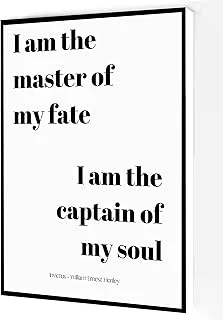
Invictus Poem Wall Art,William Ernest Henley Poem Quote,I Am The Master Of My Fate Poster Modern Artwork Painting For Living Room Office Home Decoration 12”x16” Framed
En tant que partenaire Amazon, nous pouvons percevoir une commission sur les achats eligibles.
Perhaps no poem embodies the concept of the unconquerable soul quite like William Ernest Henley’s “Invictus.” What makes this poem extraordinarily powerful is the context of its creation. Henley was only 17 years old when he underwent the amputation of his leg due to complications from tuberculosis. Written during his arduous recovery, the poem is a defiant rejection of despair.
Out of the night that covers me,
Black as the pit from pole to pole,
I thank whatever gods may be
For my unconquerable soul.
Henley’s declaration that he is the “master of his fate” and the “captain of his soul” has inspired countless individuals facing insurmountable odds, serving as a reminder that while we cannot control our circumstances, we retain absolute sovereignty over our response to them.
Rudyard Kipling and Robert Frost
Similarly, Rudyard Kipling’s “If—” operates as a masterclass in emotional regulation and stoicism. Kipling advises the reader to treat “Triumph and Disaster” as identical impostors, advocating for a balanced mind that neither inflates with success nor collapses under failure. This balanced perspective is echoed in Robert Frost’s “The Road Not Taken.” While often misinterpreted as a simple ode to non-conformity, Frost’s masterpiece is fundamentally about the courage required to make a definitive choice in life and the resilience needed to live with the consequences of that choice without regret.
Uplifting Poetry for Hard Times: Finding Light in the Dark
When searching for uplifting poetry for hard times, we often look for verses that acknowledge the reality of our pain while simultaneously pointing toward the light. The most effective encouraging poetry does not offer toxic positivity; rather, it offers a realistic, grounded form of hope.
Emily Dickinson’s “‘Hope’ is the thing with feathers” is a masterwork of metaphorical brilliance. Dickinson conceptualizes hope not as a grand, booming force, but as a small, persistent bird that perches in the soul. This bird sings continuously, regardless of the severity of the storm, and crucially, it never asks for a single crumb in return. It is a self-sustaining internal resource that requires no external validation to survive.
Langston Hughes also understood the critical necessity of holding onto light in the darkness. In his poem “Dreams,” he warns that a life without dreams is a “broken-winged bird that cannot fly.” The cultural impact of Hughes’ poetry is staggering; historical records indicate that his verses directly influenced Dr. Martin Luther King Jr.’s iconic 1963 “I Have a Dream” speech. This demonstrates how poetry about finding strength can transcend the individual and ignite resilience on a societal scale.
Maya Angelou’s “Still I Rise” serves as another monumental beacon for the oppressed. Rooted in identity, pride, and an absolute refusal to be diminished by historical or personal trauma, Angelou’s verses remind us that resilience is often an act of joyful rebellion. Reading these works can feel like witnessing the dawn after the storm, offering a profound sense of relief and renewal.
Short Poems on Hope and Modern Medical Humanities
In contemporary settings, short poems on hope are increasingly utilized to bridge the gap between clinical science and human emotion. Audrey Shafer, MD, who served as a professor at Stanford for over 30 years, perfectly encapsulates this intersection in her poem “Medicine.” Following her own major abdominal surgery for advanced cancer, Shafer experienced a profound perspective shift from physician to patient.
Her poetry explores the vulnerability of having a body that is “no longer scripted.” She writes about how patients and doctors “intertwine like roots” below the forest floor, connecting deeply to foster healing. This modern perspective highlights that true strength is rarely forged in isolation; it is built through compassionate connection and shared vulnerability.
Motivational Poems for Life: Finding Strength in Vulnerability
Modern poets continue to redefine what it means to be strong. Contemporary voices like Rupi Kaur and Audre Lorde emphasize that motivational poems for life must embrace vulnerability as a core component of courage. Kaur’s work often focuses on the necessity of being “complete on my own,” framing self-acceptance as the ultimate form of modern independence.
Audre Lorde’s poetry serves as a vital tool for defining identity outside of restrictive societal norms. Her work teaches us that survival is not just about enduring physical hardships, but about maintaining the integrity of your spirit when the world demands conformity. This evolution in poetry shows that inner strength is not always about fighting; sometimes, it is about fiercely protecting your softness in a hard world.
Metaphors for Hope: Nature, Gratitude, and Healing Through Words
When human complexities become too heavy to bear, poets frequently turn to the natural world to find an unyielding shelter of comfort. Nature offers a non-judgmental space where the cycles of loss and renewal are simply facts of existence rather than personal tragedies.
Wendell Berry’s “The Peace of Wild Things” captures this beautifully. When the speaker is overcome with “despair for the world” and anxiety about the future, he finds immediate relief by lying down where the wood drake rests. The natural world does not tax its life with forethought of grief, offering a profound lesson in mindfulness and presence.
Similarly, Naomi Shihab Nye’s poem “Kindness” teaches a difficult but transformative truth: to truly understand the depth of kindness, one must first experience profound loss. She writes that you must “feel the future dissolve in a moment like salt in a weakened broth.” Only after traversing the landscape of sorrow can kindness become the guiding force that “ties your shoes and sends you out into the day.”
How Inspirational Poems About Hope and Strength Build Daily Resilience
Understanding the power of these verses is only the first step; the true benefit comes from integrating them into your daily life. Treating poems as active tools rather than passive entertainment can significantly enhance your mental fortitude.
Consider the wisdom of the 13th-century poet Rumi in his work “The Guest House.” He suggests that being human is like running a guest house where every morning brings a new arrival—a joy, a depression, a meanness. Rumi advises us to “welcome and entertain them all,” even the dark thoughts and the shame, because each has been sent as a guide. This poetic framework aligns perfectly with modern psychological practices of emotional acceptance and mindfulness.
To build your own resilience, try creating a daily reading practice. Start your morning by reading a single poem. Allow the imagery to settle in your mind before you check your emails or engage with the news. During high-stress moments, such as before a difficult conversation or a medical procedure, silently reciting a memorized stanza can serve as a powerful grounding technique.
Ultimately, curating your own collection of inspirational poems about hope is not just a literary exercise; it is a profound act of self-care. The verses left behind by those who have weathered terrible storms serve as enduring proof that survival is possible. By internalizing these inspirational poems about hope and strength, we equip ourselves with the emotional vocabulary needed to articulate our pain, the perspective required to endure it, and the unshakeable faith necessary to emerge from the darkness into the light.
Key Data & Statistics
- Langston Hughes’ poetry directly influenced Dr. Martin Luther King Jr.’s 1963 ‘I Have a Dream’ speech (Source 10).
- Audrey Shafer, MD, served as a professor for over 30 years before using her own cancer journey to write the definitive poem ‘Medicine’ (Source 5).
- William Ernest Henley was only 17 when he underwent the amputation that inspired ‘Invictus’ (Source 4).
- Lucretia Maria Davidson wrote ‘A Song’ in the early 1800s at only 15 years old, demonstrating the early roots of resilience poetry (Source 4).
Frequently Asked Questions
How do inspirational poems help build mental resilience?
Inspirational poems act as a form of bibliotherapy. By reading about the struggles and triumphs of others, individuals can cognitively restructure their own trauma, lower anxiety levels, and find a renewed sense of control and hope during difficult times.
What is the meaning behind Emily Dickinson’s poem about hope?
Emily Dickinson’s poem “‘Hope’ is the thing with feathers” uses the metaphor of a small bird to describe hope. It illustrates that hope is a persistent, internal force that sings through the darkest storms and never asks for anything in return, requiring no external validation.
Why is William Ernest Henley’s ‘Invictus’ considered a pillar of strength?
Written while Henley was recovering from the amputation of his leg at age 17, ‘Invictus’ is a powerful declaration of personal sovereignty. Its famous closing lines, ‘I am the master of my fate, I am the captain of my soul,’ serve as a timeless reminder of human endurance.
How is poetry used in modern medicine?
The medical humanities integrate poetry into healthcare to foster empathy and healing. Works by physician-poets like Dr. Audrey Shafer help both patients and caregivers process the vulnerabilities of illness, transforming clinical science into compassionate connection.
Sources
Primary Sources
- 10 Life-Changing Poems That Will Change Your Perspective on Life | by Urooj K | An Idea (by Ingenious Piece) | Medium (medium.com · EN)
- Poems for Soft Hearts in Hard Times (grateful.org · EN)
- Poems for Tough Times (helenaclayton.co.uk · EN)
- 30 Inspirational Poems That Will Lift Your Spirits and Boost Your Mood (www.rd.com · EN)
- ‘Medicine’: A poem born of compassion, strength and triumph (med.stanford.edu · EN)
- Poetry That Will Get You Through a Hard Time (www.oprah.com · EN)
- 7 Inspirational Poems for Women About Resilience (hivelife.com · EN)
- Poems of Hope and Resilience (www.poetryfoundation.org · EN)
- 11 Powerful Poems About Strength & Courage in Hard Times (jadinelydia.com · EN)
- Poetry from Daily Life: Poems can teach kids strength, resilience (www.news-leader.com · EN)
- Poems of Hope and Strength (www.familyfriendpoems.com · EN)
- Inspirational Poems for Strength (heavensrollcall.com · EN)